
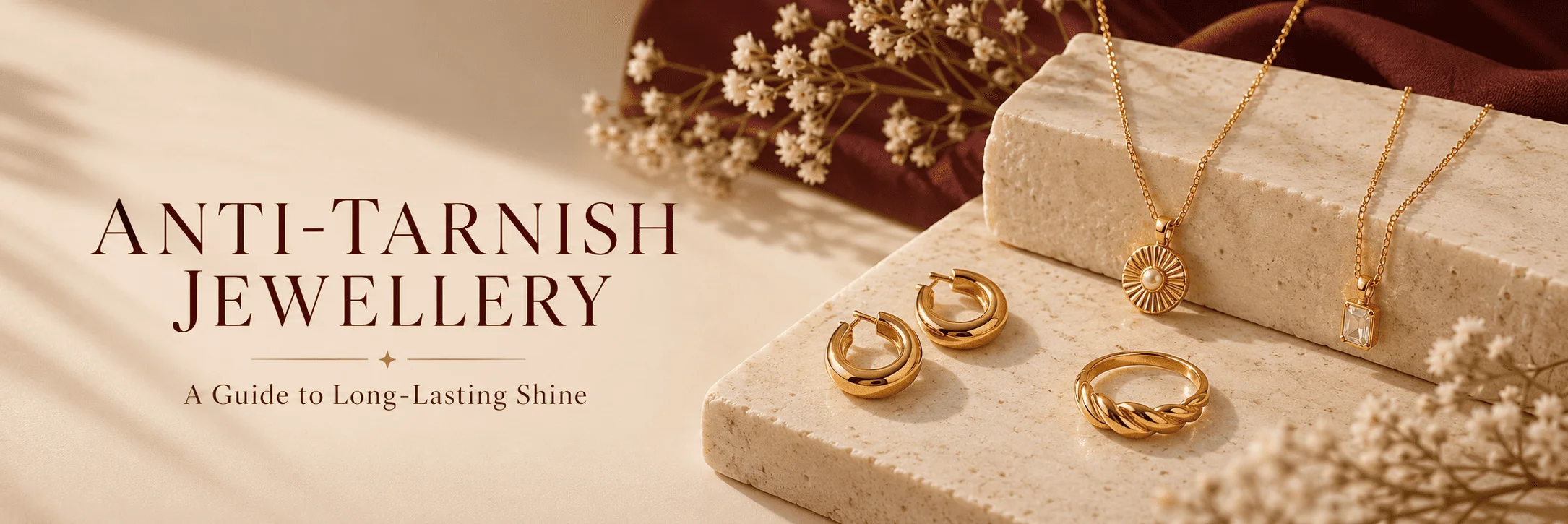
We all have that one favourite piece of jewellery we wish we could wear every day. But after a few months, many fashion jewellery pieces begin to lose their shine, become dull, turn black, or even leave a greenish mark on the skin.
This is where anti-tarnish jewellery comes in.
Designed for modern, everyday wear, anti-tarnish jewellery offers the beauty of stylish jewellery with better resistance to fading and discolouration. But what exactly makes jewellery anti-tarnish? Is it waterproof? How long does it last? And what should you look for when buying anti-tarnish jewellery in India?
This guide covers everything you need to know before adding your next piece to your jewellery collection.

What Is Anti-Tarnish Jewellery?
Anti-tarnish jewellery is jewellery designed to resist oxidation, discolouration and loss of shine for longer than conventional fashion jewellery.
Tarnishing happens when certain metals react with elements in their surroundings, including moisture, oxygen, sweat, perfumes and chemicals.
Anti-tarnish jewellery typically uses durable base metals and/or protective plating or coatings that help slow this process.
Depending on the jewellery, materials may include:
- Stainless steel
- Brass
- Sterling silver
- Gold plating
- PVD coating
- Other protective finishes
The quality of the base metal and coating plays an important role in determining how well a jewellery piece retains its appearance.
Why Does Jewellery Tarnish or Turn Black?
Jewellery doesn’t usually lose its shine without a reason. Metals can react with substances they encounter during everyday wear.
Some of the most common causes include:
1. Sweat and body oils
Natural oils and sweat from your skin regularly come into contact with jewellery. Over time, this can contribute to discolouration depending on the metal and finish.
2. Humidity and moisture
India’s climate can be particularly humid in many regions. Frequent exposure to moisture can accelerate oxidation in metals that are susceptible to tarnishing.
3. Perfume and cosmetics
Perfumes, moisturisers, hairsprays and other beauty products may contain ingredients that can affect jewellery finishes.
4. Water exposure
Regular exposure to water—particularly chlorinated pool water or salt water—can affect certain jewellery coatings and metals.
5. Improper storage
Leaving jewellery exposed to moisture, air and other pieces can contribute to tarnishing and scratching.
This is why both the quality of your jewellery and the way you care for it matter.
What Materials Are Commonly Used for Anti-Tarnish Jewellery?
Not every piece labelled “anti-tarnish” is made in the same way.
Understanding the material underneath the beautiful finish can help you make a better buying decision.
Stainless Steel Jewellery
Stainless steel is popular for everyday jewellery because it is strong, durable and naturally resistant to corrosion and tarnishing.
It can also be combined with gold-coloured coatings to create jewellery that offers the appearance of gold while remaining suitable for regular wear.
Brass Jewellery
Brass is widely used in fashion jewellery because it can be shaped into intricate and beautiful designs.
However, untreated brass can naturally oxidise over time. High-quality plating or protective coatings can help improve its resistance to tarnishing.
Sterling Silver
Sterling silver is a precious-metal alloy commonly used for jewellery. It can tarnish naturally when exposed to air and certain substances, but regular cleaning and proper storage can help restore and maintain its appearance.
Gold-Plated Jewellery
Gold-plated jewellery has a thin layer of gold applied over another base metal.
The durability of gold-plated jewellery depends on several factors, including the base metal, plating method, plating thickness, usage and care.
PVD-Coated Jewellery
PVD stands for Physical Vapour Deposition.
PVD is a coating process commonly used to create a durable surface finish on metals such as stainless steel. In jewellery, it can be used to produce gold-coloured finishes with good wear resistance.
The exact durability will still depend on the quality of the coating and how the jewellery is used.
What Is 18K Gold-Plated Jewellery?
You may frequently see terms such as 18K gold-plated jewellery while shopping online.
So what does it actually mean?
18K refers to the purity of the gold used in the plating. Pure gold is considered 24K, while 18K gold contains approximately 75% gold mixed with other metals.
In 18K gold-plated jewellery, a layer containing 18K gold is applied over a base metal.
This creates the warm, luxurious appearance associated with gold jewellery without requiring the entire piece to be made from solid gold.
However, 18K gold-plated jewellery is not the same as solid 18K gold jewellery.
The lifespan of the finish depends heavily on plating quality, thickness, base metal and care.
Is Anti-Tarnish Jewellery Waterproof?
This is one of the most common questions people ask when buying anti-tarnish jewellery.
The answer is: it depends on the material and coating.
“Anti-tarnish” does not automatically mean “waterproof.”
Some high-quality stainless steel and PVD-coated jewellery can tolerate occasional water exposure better than conventional fashion jewellery. Other plated pieces may require more careful handling.
Unless a jewellery brand specifically states that a particular product has been tested or designed for prolonged water exposure, it is safer to minimise unnecessary contact with water.
For longer-lasting jewellery, consider removing it before:
- Swimming
- Entering the sea
- Showering for prolonged periods
- Using cleaning chemicals
- Applying perfumes directly around the jewellery
A little extra care can significantly help maintain your jewellery’s appearance.
How Long Does Anti-Tarnish Jewellery Last?
There is no universal lifespan for anti-tarnish jewellery.
A good-quality piece can maintain its finish for a long time when properly cared for, but longevity varies based on:
- Base metal
- Plating material
- Plating thickness
- Coating technique
- Frequency of wear
- Exposure to water
- Exposure to sweat
- Perfumes and cosmetics
- Storage
- Individual body chemistry
This is why you should be cautious of claims suggesting that every anti-tarnish jewellery piece will remain unchanged forever.
Think of anti-tarnish jewellery as more resistant to tarnishing rather than completely immune to it.
Anti-Tarnish Jewellery vs Regular Fashion Jewellery
What’s the difference?
| Feature | Anti-Tarnish Jewellery | Regular Fashion Jewellery |
|---|---|---|
| Tarnish resistance | Designed for higher resistance | Usually lower |
| Everyday wear | Often suitable | Depends on material |
| Maintenance | Generally easier | May require more care |
| Water resistance | Depends on material/coating | Often limited |
| Durability | Can be longer with proper care | Varies considerably |
| Price | Often moderately higher | Usually inexpensive |
The most important thing is to check the actual material specifications rather than relying solely on marketing terminology.
How to Choose Good Anti-Tarnish Jewellery in India
With anti-tarnish jewellery becoming increasingly popular, many products now carry the label.
Before purchasing, consider these factors.
1. Check the Base Metal
Look for brands that clearly disclose what their jewellery is made from.
For example, “gold-tone necklace” tells you very little about the material, while specifications such as stainless steel with PVD coating provide considerably more information.
2. Check the Plating or Coating
Find out whether the jewellery uses conventional gold plating, PVD coating or another protective finish.
The coating process can significantly influence durability.
3. Read the Product Description
A reliable product page should provide useful information about:
- Material
- Finish
- Dimensions
- Care instructions
- Water resistance, where applicable
Avoid assuming that every product from the same brand has identical specifications.
4. Look at Real Product Images
Detailed photographs and videos can help you understand the actual colour, size, finish and appearance of a jewellery piece.
5. Check Care Instructions
A good jewellery brand should tell customers how to maintain their pieces.
6. Understand the Brand’s Claims
Terms such as “anti-tarnish,” “water-resistant” and “waterproof” are not interchangeable.
Look for clear explanations rather than relying only on bold marketing claims.
How to Care for Anti-Tarnish Jewellery
Even durable jewellery benefits from proper care.
Follow these simple habits to help your jewellery maintain its shine:
Apply perfume before wearing jewellery.
Allow perfume, moisturiser and other products to dry before putting your jewellery on.
Wipe jewellery after wearing it.
Use a soft, dry cloth to gently remove sweat, oil and moisture.
Store jewellery separately.
Keeping individual pieces in soft pouches or separate compartments can reduce scratching and tangling.
Keep it dry when possible.
Unless your jewellery is specifically designed for regular water exposure, remove it before swimming or prolonged contact with water.
Avoid harsh chemicals.
Cleaning agents, chlorine and other chemicals can affect jewellery surfaces and coatings.
Don’t throw all your jewellery together.
Chains, rings and earrings rubbing against one another can create scratches.
Small habits can make a big difference to how your jewellery looks over time.
Can You Wear Anti-Tarnish Jewellery Every Day?
Yes, many anti-tarnish jewellery pieces are designed specifically with everyday wear in mind.
Minimal necklaces, hoops, bracelets and rings can easily transition from office wear to brunches, dinners and special occasions.
For everyday jewellery, look for pieces that combine:
- Durable materials
- Comfortable designs
- Secure clasps
- Versatile styling
- Easy maintenance
A well-chosen jewellery collection doesn’t need dozens of pieces. A few versatile designs can work across multiple outfits and occasions.
Is Anti-Tarnish Jewellery Worth Buying?
For someone who enjoys wearing jewellery regularly but doesn’t necessarily want to invest in solid gold for every style, good-quality anti-tarnish jewellery can offer an attractive middle ground.
It can provide:
- Stylish contemporary designs
- Better resistance to everyday wear
- Easier maintenance
- Versatility
- More accessible pricing than solid precious-metal jewellery
However, quality varies between products and brands.
Always look beyond the phrase “anti-tarnish” and understand exactly what you’re purchasing.
Frequently Asked Questions About Anti-Tarnish Jewellery
Does anti-tarnish jewellery ever tarnish?
It can. Anti-tarnish jewellery is designed to resist or slow tarnishing, but its durability depends on the material, coating, environment and care.
Can I shower wearing anti-tarnish jewellery?
That depends on the product. Some stainless steel and PVD-coated pieces may tolerate water better than conventional plated jewellery, but you should follow the care instructions provided for your specific piece.
Does perfume damage anti-tarnish jewellery?
Frequent direct exposure to perfumes and other cosmetic products can affect some jewellery finishes. Applying perfume before putting on your jewellery is a good habit.
Is stainless steel jewellery anti-tarnish?
Stainless steel is generally highly resistant to corrosion and tarnishing, which is one reason it is widely used for everyday jewellery.
Is anti-tarnish jewellery the same as waterproof jewellery?
No. Anti-tarnish refers to resistance against tarnishing or discolouration. Waterproof implies resistance to water exposure. One does not automatically guarantee the other.
How should I store anti-tarnish jewellery?
Keep your jewellery clean and dry, preferably in individual pouches, boxes or compartments away from excess humidity.
Final Thoughts
Jewellery should be something you enjoy wearing—not something that spends most of its life hidden away because you’re worried about losing its shine.
Understanding what anti-tarnish jewellery is, what materials are used, how coatings work and how to care for your pieces can help you make smarter jewellery purchases.
When shopping for long-lasting jewellery in India, don’t focus only on the words “anti-tarnish.” Look at the base metal, coating, craftsmanship and care instructions behind the product.
At Aanvira, we believe everyday jewellery should combine timeless style, thoughtful design and materials selected for lasting wear.
Whether you’re looking for a delicate necklace for work, elegant earrings for dinner or versatile jewellery you can style again and again, choose pieces that fit beautifully into your everyday life.
Discover Aanvira — jewellery designed for your everyday moments.